
Fall Hummingbird Migration in South Louisiana - Timing Tips and What to Do If Injured
That tiny green flash at the feeder in September might be a bird on a serious journey. In South Louisiana, hummingbird season doesn’t end when summer starts to fade. In many backyards, that’s when things get really interesting.
South Louisiana sits in a sweet spot for migrating birds. It has warm weather, blooming plants, wooded neighborhoods, bayous, gardens, and a coastline that matters a lot to birds heading toward the Gulf. For hummingbirds, this region can be a place to fuel up before pushing south, or a safe stop after days of rough weather.
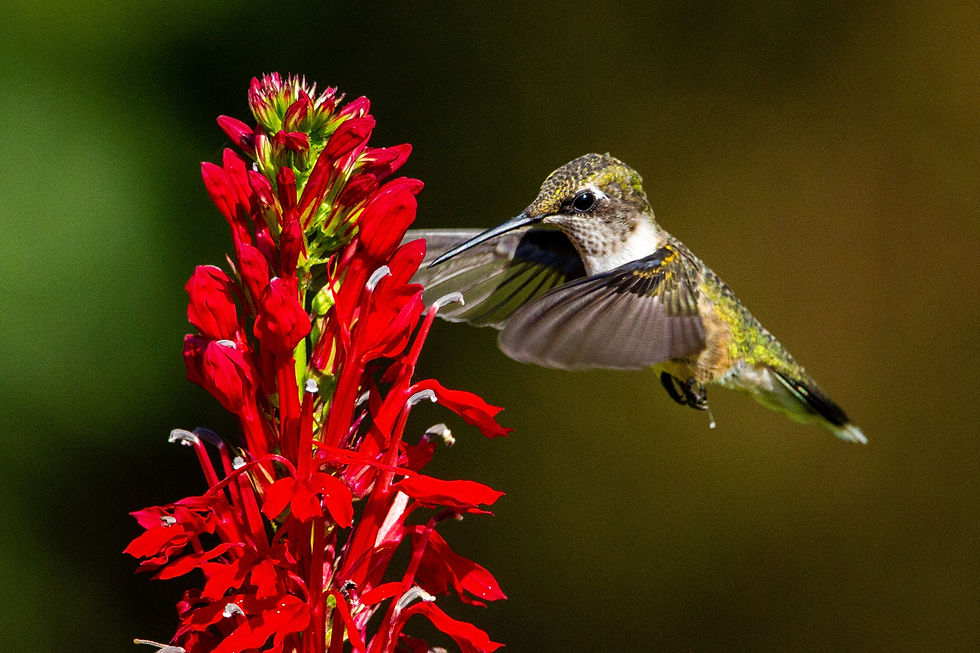
The main traveler most people see is the Ruby-throated Hummingbird, but keep your eyes open. Rufous Hummingbirds and Buff-bellied Hummingbirds can also show up, especially later in the season or along the Gulf Coast. Some visits are quick. Some birds hang around longer than expected.

When fall hummingbird migration happens in South Louisiana
The fall movement starts earlier than many people think. By the time September feels like “migration season,” some adult males have already left.
Late July through August brings the adult males
Adult male Ruby-throated Hummingbirds are usually the first to head south. In South Louisiana, that can begin in late July and continue through August.
If you had a flashy male guarding your feeder all summer and he suddenly disappears, he probably didn’t leave because something went wrong. He may have simply started his migration.
Male Ruby-throated Hummingbirds are easy to recognize when the light catches their throat. That bright ruby patch can look black in shade, then glow red when the bird turns just right. During late summer, these males often become less consistent at feeders as they shift into travel mode.
September is the big month for females and juveniles
September is usually the peak time for females and young birds moving through South Louisiana. This is when a quiet feeder can suddenly get busy again.
Juvenile Ruby-throated Hummingbirds can be tricky to identify because they often look like females. They may have pale throats, faint streaking, or a few tiny dark spots. They’re also learning the rules of the feeder, so they can seem bold one minute and clumsy the next.
This is the stretch when keeping feeders clean and filled really pays off. Some of these birds are local summer residents preparing to leave. Others are migrants passing through from farther north.
October and later can still bring surprises
By October, many Ruby-throated Hummingbirds have moved on, but that doesn’t mean the show is over. South Louisiana can still get late Ruby-throated migrants, and this is also when western species like Rufous Hummingbirds may appear.
Buff-bellied Hummingbirds are more associated with the Gulf Coast and can show up in select areas, especially where habitat and food sources are right. They’re larger-looking than Ruby-throated Hummingbirds, with a lovely green body, buff-colored belly, and reddish bill with a dark tip.
If you see a hummingbird after your “regulars” have left, don’t assume it’s lost. It may be exactly where it needs to be.
What triggers hummingbirds to migrate
Hummingbirds don’t wait for a calendar reminder. Their bodies respond to seasonal changes.
The biggest trigger is shorter daylight hours. As days get shorter after summer solstice, hormonal changes help prepare birds for migration. They begin feeding more often and packing on fat, which becomes fuel for the journey.
Food supply also matters. Late summer flowers change. Insects shift with weather and rainfall. Cold fronts begin to move through. These changes don’t always “cause” migration on their own, but they shape when birds leave, where they stop, and how long they stay.
Fall migration is not a single wave. It’s more like a rolling movement, with different ages and sexes traveling at slightly different times.
A few things can affect what you see in your own yard:
Local flower blooms
Rainfall and drought
Cold fronts and wind direction
Nearby trees and shelter
Feeder cleanliness
Competition from other hummingbirds
A yard that’s busy one week may go quiet the next. Then a new bird may pop in like it owns the place.
Why South Louisiana is such an important rest stop
South Louisiana gives migrating birds what they need most: food, cover, and a place to pause.
For some Ruby-throated Hummingbirds, the journey may include crossing the Gulf of Mexico. Others may follow coastal routes through Texas and Mexico. Either way, the Gulf region is a key refueling zone.
A hummingbird getting ready for a major flight needs to feed heavily. Nectar provides quick energy, while tiny insects and spiders provide protein and nutrients. That’s why a good hummingbird yard isn’t just a feeder. It’s a mini habitat.
South Louisiana’s mix of gardens, woodland edges, wetlands, and warm fall weather can support migrants at just the right time. Even a small patio with flowers and a clean feeder can help, especially in neighborhoods where natural food is patchy.
Keep your feeders up after your regular birds leave
One of the biggest myths about hummingbird feeding is that leaving feeders up will stop birds from migrating. It won’t.
Migration is driven mostly by day length and internal rhythms. A feeder won’t convince a healthy hummingbird to ignore those signals. What it can do is help late migrants, young birds, and unexpected visitors get the fuel they need.
If your usual birds disappear in August or September, keep at least one feeder up for a while. In South Louisiana, it’s reasonable to maintain feeders into October and even beyond if you’re willing to keep them clean. Late-season Rufous or Buff-bellied Hummingbirds may use them.
The key phrase is if you’re willing to keep them clean. A dirty feeder is worse than no feeder.
How often to clean feeders in hot weather
South Louisiana heat is no joke. Sugar water can spoil quickly, especially in direct sun.
Use this simple routine:
In hot weather, clean and refill feeders every 1 to 2 days.
In milder weather, clean and refill every 2 to 3 days.
If nectar looks cloudy, stringy, or has black specks, dump it right away.
Scrub the feeding ports, not just the bottle.
Rinse well so no residue remains.
Mold can collect in tiny feeder ports where birds put their bills and tongues. A bottle may look fine while the ports are nasty, so take the feeder apart when you clean it.
The best nectar recipe for hummingbirds
The best nectar recipe is simple:
Mix 1 part plain white granulated sugar with 4 parts water.
That means:
Sugar | Water |
1/4 cup | 1 cup |
1/2 cup | 2 cups |
1 cup | 4 cups |
Stir until the sugar fully dissolves. You can heat the water to help it dissolve, but let the nectar cool completely before filling the feeder.
Skip anything extra. Don’t use:
Red dye
Honey
Brown sugar
Powdered sugar
Artificial sweeteners
Sports drinks
Fruit juice
Plain white sugar and clean water are all they need from a feeder. The red parts of the feeder are enough to attract attention. Dye doesn’t help the bird, and it adds risk for no good reason.
Store extra nectar in the refrigerator and use it within several days.

How to attract migrating hummingbirds to your yard
A feeder helps, but the best yards offer more than sugar water. Migrating hummingbirds look for a mix of fast energy, natural food, and safe resting spots.
Try these backyard tips:
Plant nectar-rich flowers
Tubular flowers are especially useful because hummingbirds can reach nectar that many larger insects can’t. In South Louisiana, good choices often include native and well-adapted plants with red, orange, pink, or purple blooms.
Good options may include:
Coral honeysuckle
Turk’s cap
Cardinal flower
Scarlet sage
Firebush
Cypress vine, where appropriate and managed
Shrimp plant
Native salvia species
Aim for a long bloom season. A yard with flowers in July, August, September, and October gives migrants more reasons to stop.
Keep some insects around
Hummingbirds don’t live on nectar alone. They eat tiny insects and spiders, especially when fueling migration.
Avoid insecticides. Broad spraying can remove the small insects hummingbirds need and exposes birds to chemicals. A few spiderwebs in quiet corners can also be useful, since hummingbirds pick tiny insects from webs and may use spider silk in nests during breeding season.
Place feeders where birds feel safe
A feeder out in the open may be easy for you to see, but birds also need cover. Hang feeders near shrubs or trees, but not so close that cats can hide and pounce.
A good setup gives hummingbirds:
A clear flight path
Perches nearby
Some shade during the hottest part of the day
Distance from windows, or window protection to reduce collisions
More than one feeder if a bully bird guards the main one
If one hummingbird won’t let others feed, try placing a second feeder out of sight of the first. Tiny birds can have huge attitudes.
The main hummingbirds to watch for in South Louisiana
The Ruby-throated Hummingbird is the main migrant in most South Louisiana backyards. Still, it’s worth learning the other possibilities.
Species | What to know |
Ruby-throated Hummingbird | The most common migrant. Adult males often leave first, followed by females and juveniles. |
Rufous Hummingbird | An uncommon but regular western visitor in the Gulf South, often noticed in late fall or winter. |
Buff-bellied Hummingbird | A Gulf Coast species that may appear in suitable areas, especially closer to coastal habitat. |
Female and juvenile hummingbirds can be hard to identify, so don’t feel bad if you can’t name every bird at the feeder. Take photos when you can. Clear side views, tail views, and throat shots help with identification.
What to do if you find an injured hummingbird
Finding an injured hummingbird can feel overwhelming because they’re so small and fragile. The best thing you can do is act calmly and get help fast.
Hummingbirds are federally protected birds. In the United States, it’s illegal to keep, treat, or raise them without the proper permits. That protection exists for a reason. These birds need specialized care, and well-meaning help can accidentally make things worse.
If you find an injured hummingbird:
Do not try to feed it nectar or water.
Injured birds can aspirate fluids, which can be dangerous. Wait for instructions from a permitted avian rehabilitator.
Contain it gently if it’s safe to do so.
Use a small ventilated box lined with a soft cloth or paper towel. Keep the bird upright if possible.
Keep it warm, dark, and quiet.
Stress can be deadly. Keep pets, children, noise, and handling away.
Contact a federally permitted avian rehabilitator right away.
In South Louisiana, that may include a permitted organization like For The Birds of Acadiana.
Follow the rehabilitator’s instructions.
They may ask where the bird was found, what happened, and whether there are cats, windows, or feeders nearby.
Don’t attempt home care, even if the bird looks “just stunned.” Window strikes, cat attacks, and wing injuries all need trained evaluation. Cat contact is especially serious because bacteria from a cat’s mouth or claws can be dangerous to birds.

FAQ
When should I take down my hummingbird feeder in South Louisiana?
You don’t need to rush. Keep it up after your regular birds leave, especially through September and October, as long as you can keep it clean. Late migrants and winter visitors may still use it.
Will leaving a feeder up keep hummingbirds from migrating?
No. Feeders don’t stop migration. Shorter daylight hours and seasonal body changes drive the journey. A clean feeder gives traveling birds extra fuel.
Why did my male hummingbird disappear before the others?
Adult males often leave first, sometimes in late July or August. Females and juveniles usually peak later, with September being a very active month in South Louisiana.
What is the safest homemade hummingbird nectar?
Use 1 part plain white granulated sugar to 4 parts water. Don’t add red dye, honey, brown sugar, or sweeteners. Whether you boil or simply use hot tap water to dissolve the sugar, just ensure the mixture cools completely to room temperature before filling your feeders.
Who should I call for an injured hummingbird?
Call a federally permitted avian rehabilitator. In the Acadiana area, For The Birds of Acadiana is an example of the kind of permitted avian rehab resource to contact. Keep the bird quiet and contained while waiting for instructions.
A small feeder can matter more than you think
Fall hummingbird season in South Louisiana is quick, beautiful, and a little unpredictable. Adult males may start moving in late summer, September brings a wave of females and juveniles, and later weeks can bring surprise visitors like Rufous or Buff-bellied Hummingbirds.
Keep the nectar fresh. Grow flowers if you can. Leave a safe place to perch. And if you find an injured bird, skip the home remedies and call a permitted rehabilitator.
That tiny visitor at your feeder may only stay for a few minutes, but your yard could be one of the stops that helps it make the next leg of the trip.
Picking up an injured wild bird without transportation or a transportation plan crosses the line from a rescue to an illegal delay in care.
Let’s work together for the sake of preservation of our precious avian wildlife.
Stay informed about our latest rehabilitation efforts and get behind-the-scenes updates on our work with avian wildlife. Subscribe to our FREE V.I.B (Very Important Bird) list today and soar with us in making a difference! https://www.forthebirdsofacadiana.com/vip-list

220 Cambridge Dr.
Lafayette, LA 70503
337-501-4523
We are a licensed, non-profit wildlife rehabilitation facility funded solely through donations. Thank you for your support.
For The Birds of Acadiana is a non-profit organization, classified as tax-exempt under section 501(c)(3) of the Internal Revenue Code. Contributions may be deductible to the extent permitted by applicable laws. Consult with your tax professional for details. Our Federal Tax ID number is 85-1024416.


